
KLOOK
PRODUCT DESIGN
Simplifying international travel booking for U.S. users
ROLE
Product Designer
SCOPE
UI Redesign and Branding
TIMELINE
3 months
Feb - May 2024
SKILLS
User Research, Literature Review, Figma
CONTEXT
Klook is Asia’s leading travel and experiences platform with $1 billion in funding, $31 million platform views, and 32% market share. Klook offers seamless booking for attractions, tours, transportation, and other unique experiences across the globe.
This project focused on Klook’s expansion into the Western market, redesigning a platform initially designed for Asian consumer behaviors to better align with U.S. audiences, while preserving the brand’s core identity and business model.
TLDR
I redesigned the home page with a streamlined navigation system and product-based search to help users find relevant options faster and drive increased bookings.
THE PROBLEM
Too many products and little usability
With offerings spanning tours, transit, dining, and technology, the sheer volume of information presented at once made it difficult for users to quickly find relevant products.
Booking & Budgeting
Travel Preferences
Research & Recommendations
Tours & experiences
Day trips
Airport transfers
Hotels
Water sports
Cultural experiences
Booking & Budgeting
Travel Preferences
Research & Recommendations
WiFi & Sim Cards
Insurance
Car rentals
Attraction tickets
Cruises
Massages & spas
OBJECTIVES
My primary objective was to reduce friction throughout the user journey, guiding users seamlessly from discovery to booking. I focused on three points:
01
Research user preferences to surface and prioritize high-impact pain points
02
Simplify navigation to streamline the path from discovery to booking
03
Establish clear visual hierarchy to reduce cognitive overload
USER RESEARCH
I interviewed users across diverse age groups and travel experience levels to uncover key pain points in navigating Klook’s current website.
KEY INSIGHTS
Users felt overwhelmed by too many options and promotions, making it difficult to evaluate choices and trust the platform
Lack of clear, credible information prevented users from booking with confidence
Travelers favor intentional planning behaviors: booking in advance, relying on reviews, and creating itineraries
LITERATURE REVIEW
I reviewed studies on Western consumer behavior, cross-cultural UI/UX, and strategies for simplification and personalization.
KEY INSIGHTS
Western travelers prioritize simplicity, transparency, and personalized experiences when making travel decisions
Western UI reduces cognitive load through minimalism, while Eastern UI builds trust through depth, structure, and detail
Smart filters and AI-driven recommendations help users quickly narrow options and reduce decision fatigue
INITIAL IDEATION
Assessing crucial features
I focused on simplifying the home page, the primary entry point for users, to reduce visual clutter and minimize friction in both discovery and booking.
Low-fidelity wireframe
Travelers
Dates
Destination
Search
Log In
Sign up
Go to app
Your world of joy
Explore
For You
Weekly Ranking
Create Itinerary
Hotels
Transportation
1.
2.
3.
4.
Attractions
Technology
USD

01
02
03
04
05
06
Impact-feasibility matrix
04
High Impact
Low Impact
Low Feasibility
High
Feasibility
06
05
03
01
02
04
Products For You
03
Exploring Products
02
Search Bar
01
Nav Bar
05
Weekly Ranking
06
Create Itinerary
I prioritized iterating on the four key homepage features that offered the greatest balance of impact and feasibility, focusing on improvements that could meaningfully enhance user experience and without requiring extensive structural changes.
DESIGN SOLUTIONS
Product-based search, organized for clarity


BEFORE
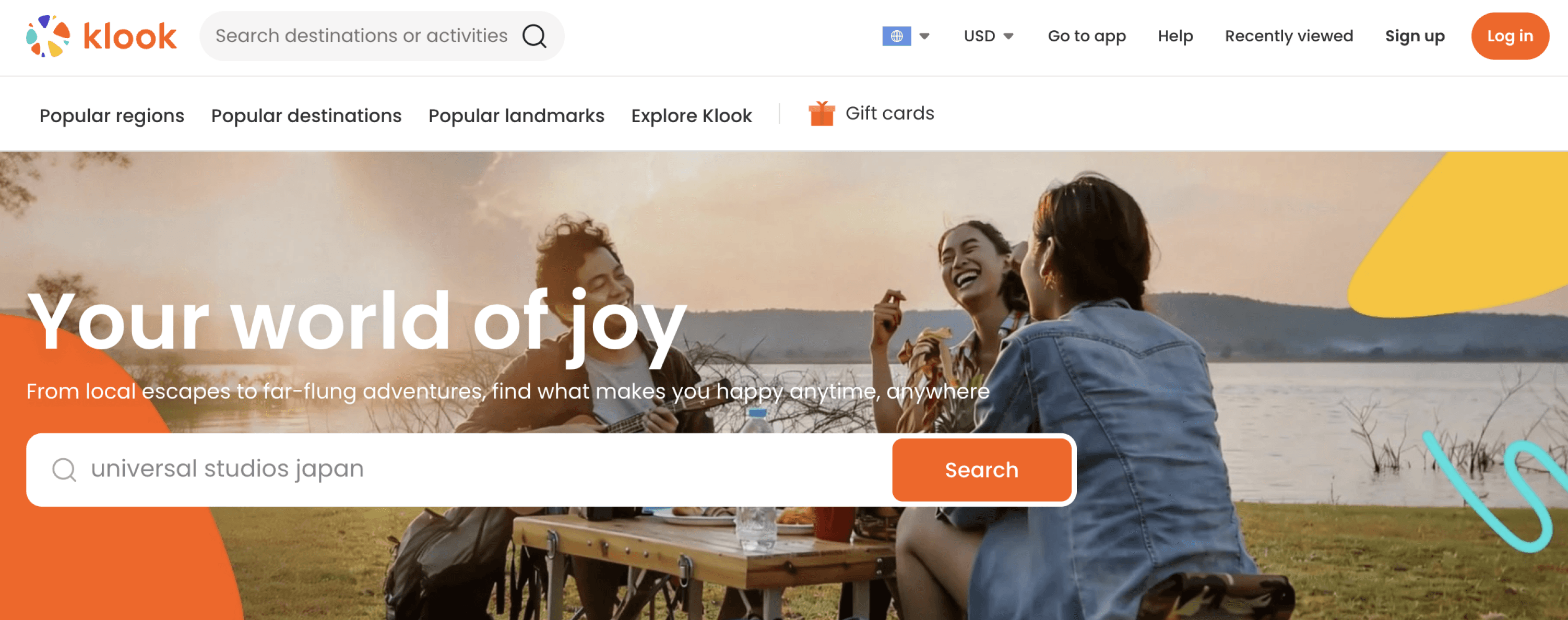
Two search bars with no structure
Despite having two search bars, users reported difficulty locating products. Because both search functions were unstructured and nearly identical in purpose, they added cognitive load instead of clarity.
ITERATIONS


I consolidated the two search bars into a single, more structured search experience. I refined the categorization and labeling of Klook’s diverse offerings to improve clarity. I experimented with visual hierarchy, such as font weight and shadow, to create a cleaner, more intuitive interface.
AFTER
In the final iteration, I introduced icons alongside each category to reinforce meaning at a glance. I intentionally removed the shadow behind the search bar to maintain Klook’s clean visual language. When a category is selected, orange and bolded text provide clear visual feedback. The search bar is also responds dynamically, updating input fields based on the selected category to guide users toward more relevant results.
DESIGN SOLUTIONS
Intuitive, streamlined navigation
BEFORE


Two navigation bars
Redundant options
Vague wording
Having two navigation bars felt redundant and added unnecessary complexity. The labels Popular “Regions,” “Destinations,” and “Landmarks” were also vaguely defined, making it unclear how they differed from one another. This unclear structure made it harder for users to understand where to click and how to navigate the platform.
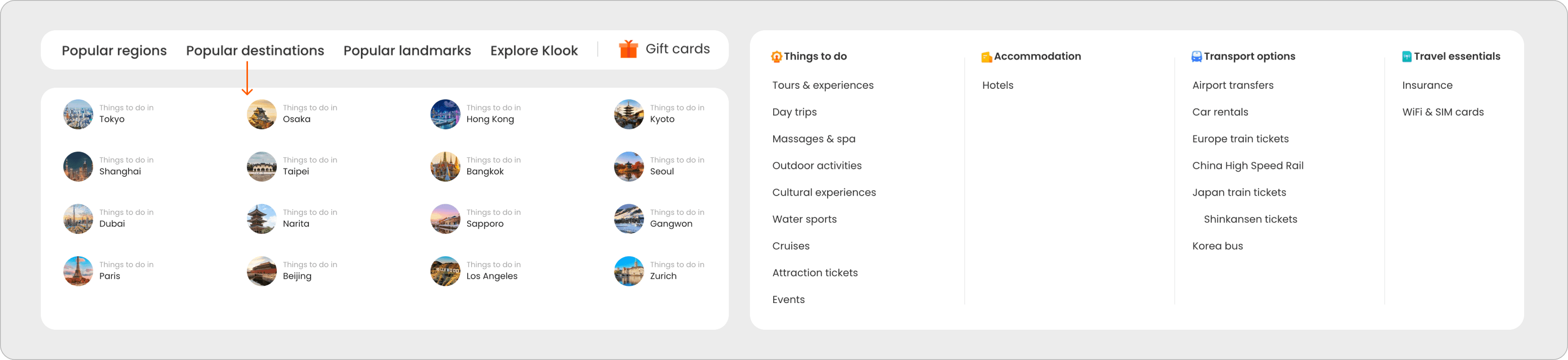
The dropdown menus are overcrowded with information, which makes it difficult for users to quickly find what they need.
AFTER

I chose to keep a single primary navigation bar at the top, as the secondary navigation contained too much information to be effectively organized within dropdown menus.
The previous dropdown structure limited exploration by requiring users to search through dense lists. By redesigning destinations as gallery-style cards, I created a visually driven browsing experience that encourages exploration and reduces cognitive effort.
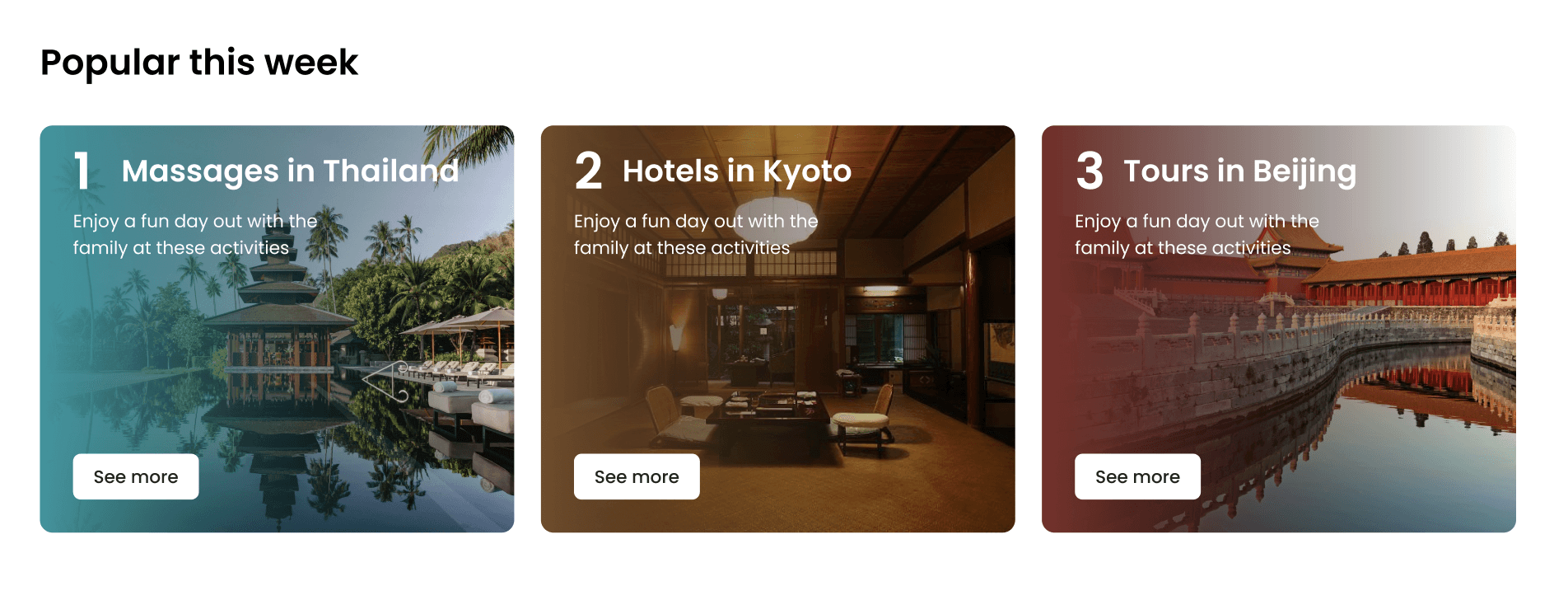
I also redesigned the Popular Destinations section into a card-based gallery that showcases the same key destinations previously housed in the dropdown. By presenting them as weekly experiences, the design highlights the breadth of Klook’s offerings while making the content more engaging and easier to digest.
I streamlined the navigation by consolidating two nav bars into one and replacing text-heavy destination dropdowns with visual, gallery-style cards to create a clearer, exploration-driven browsing experience.
DESIGN SOLUTIONS
Ensuring credibility
BEFORE
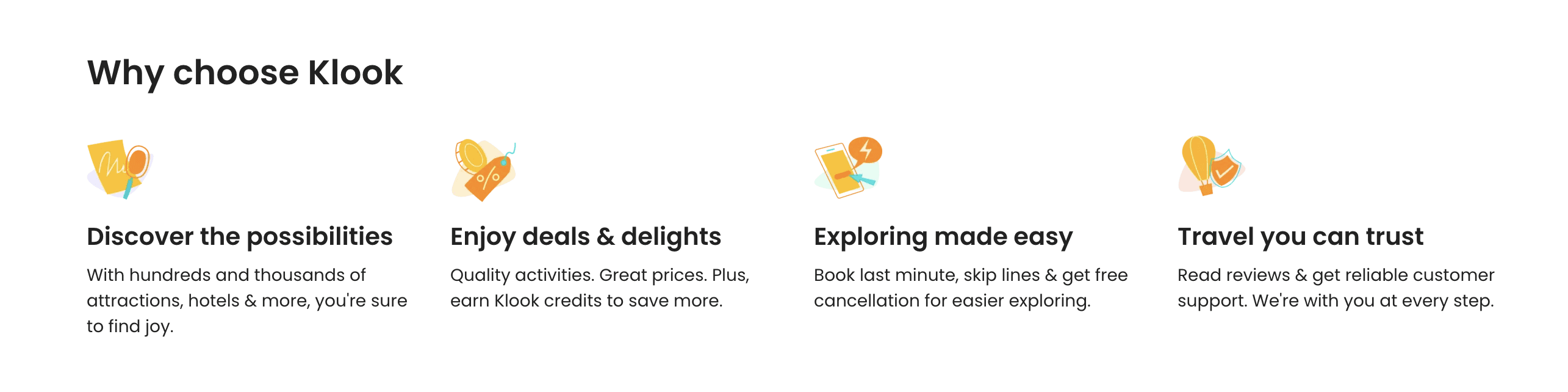
Previously, the site relied primarily on vague qualitative claims that highlighted platform features but did little to build trust or provide reassurance before purchase.
AFTER
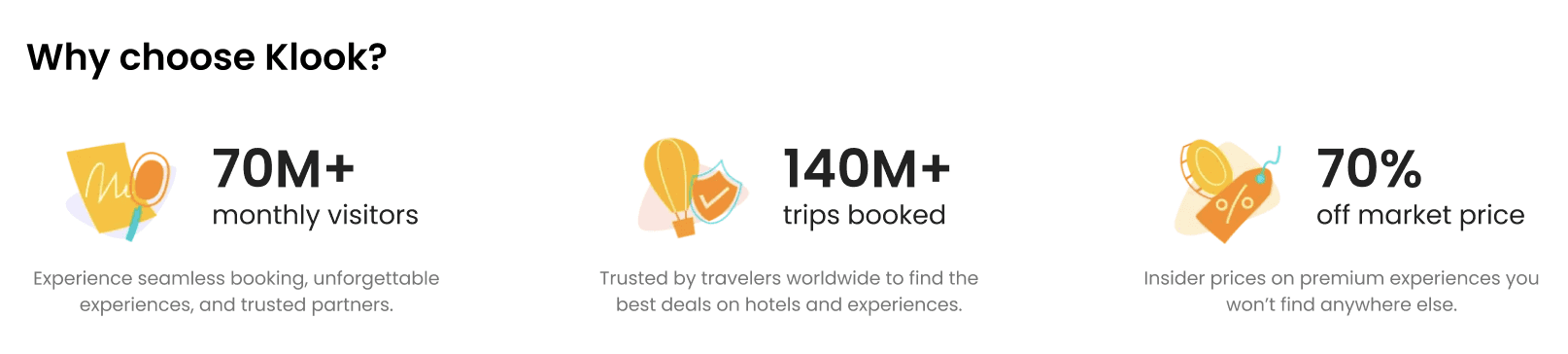
I replaced vague claims with quantified impact metrics to build credibility and provide users with reassurance before committing to a purchase.
DESIGN SOLUTIONS
Personalization
BEFORE
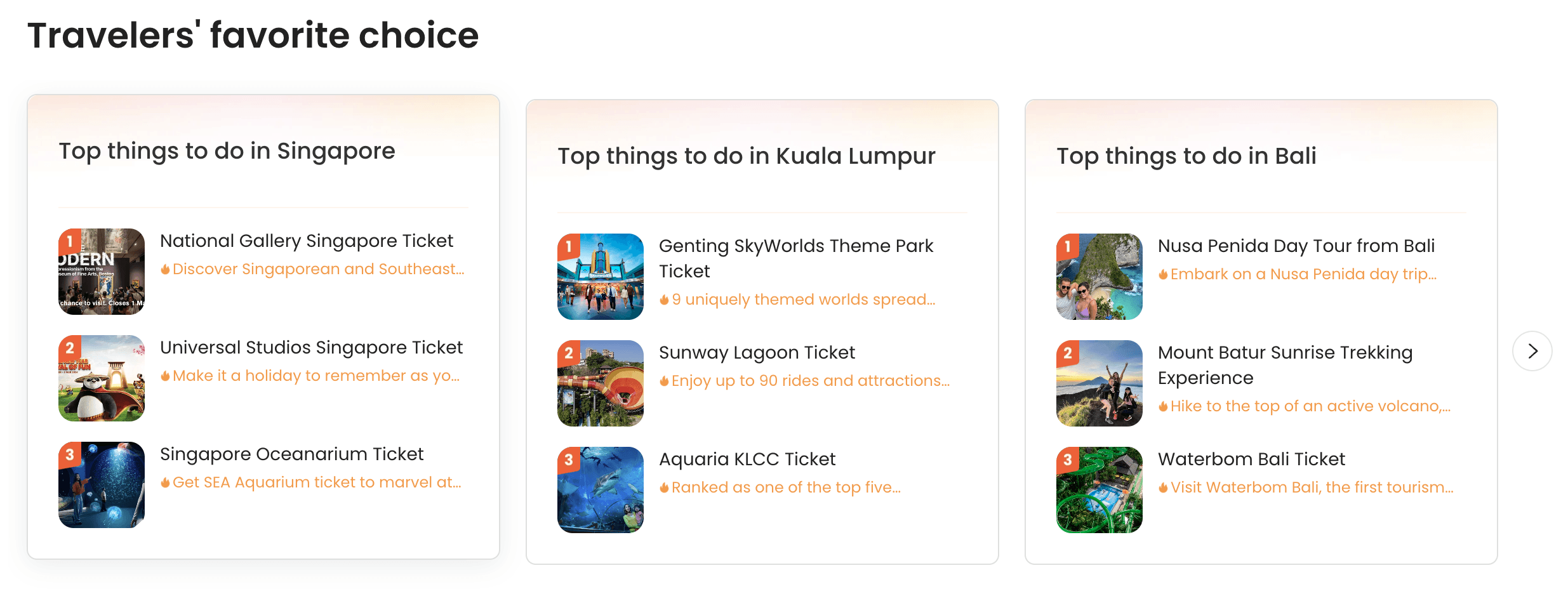
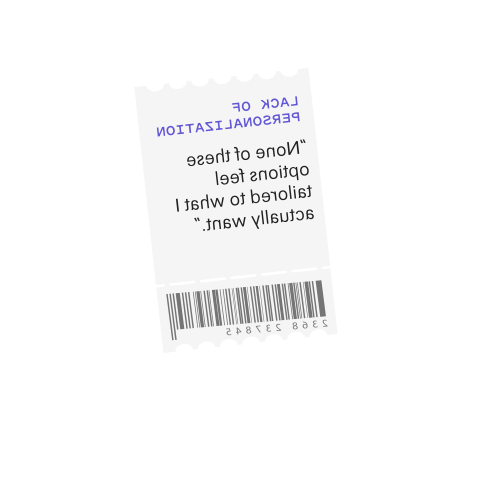
The homepage only highlights “Travelers’ Favorite” selections and does not offer personalized recommendations tailored to individual user preferences.
AFTER
After users complete onboarding and log in, the home page updates to show destinations tailored to their preferences. For returning users, the credibility metrics are reduced since trust has already been established.
FINAL DESIGN
From discovery to booking
The final home page integrates sections within a clear visual hierarchy and structured information architecture. Revenue-driving elements such as product offerings and deals are prioritized near the top to encourage engagement, while app and external promotions are positioned strategically to support client goals without disrupting user flow.
REFLECTION
Lessons & Next Steps
This project reinforced how strongly navigation and hierarchy influence user behavior. Designing for Western expansion required balancing trust, clarity, and discovery. It was rewarding to turn research into concrete UI changes that reduced friction in the booking journey. Moving forward, I hope to validate these decisions through usability testing and A/B experiments.
TAKE HOME POINTS
01. Hierarchy shapes decisions. Clear structure improves navigation confidence and efficiency.
02. Trust is contextual. New users need reassurance while returning users prioritize relevance.
03. Visual design supports exploration. Structured, scannable interfaces make exploration more intuitive.
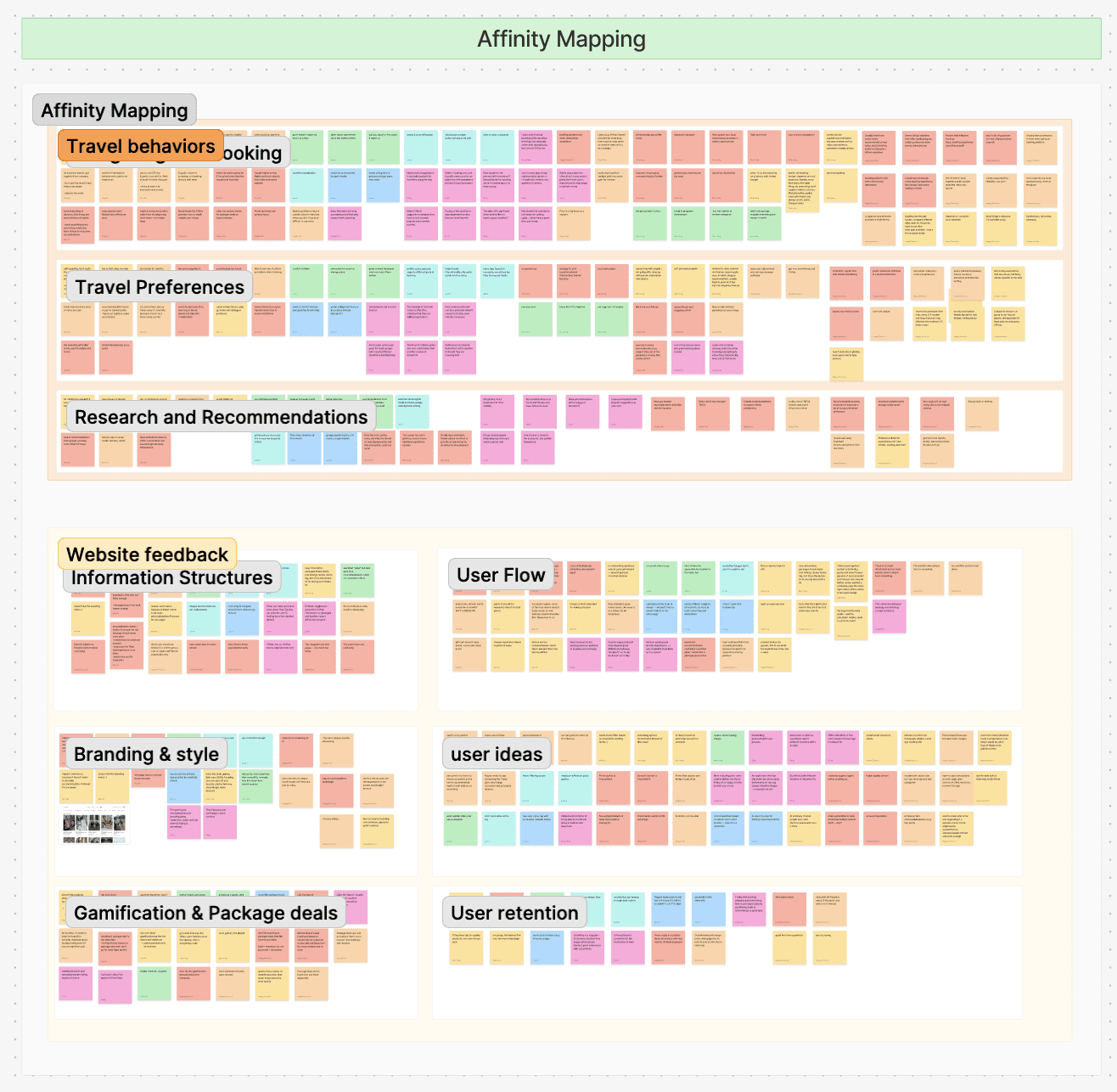
Interview insights were synthesized through affinity mapping, clustering coded themes to reveal key patterns, motivations, and opportunity areas.
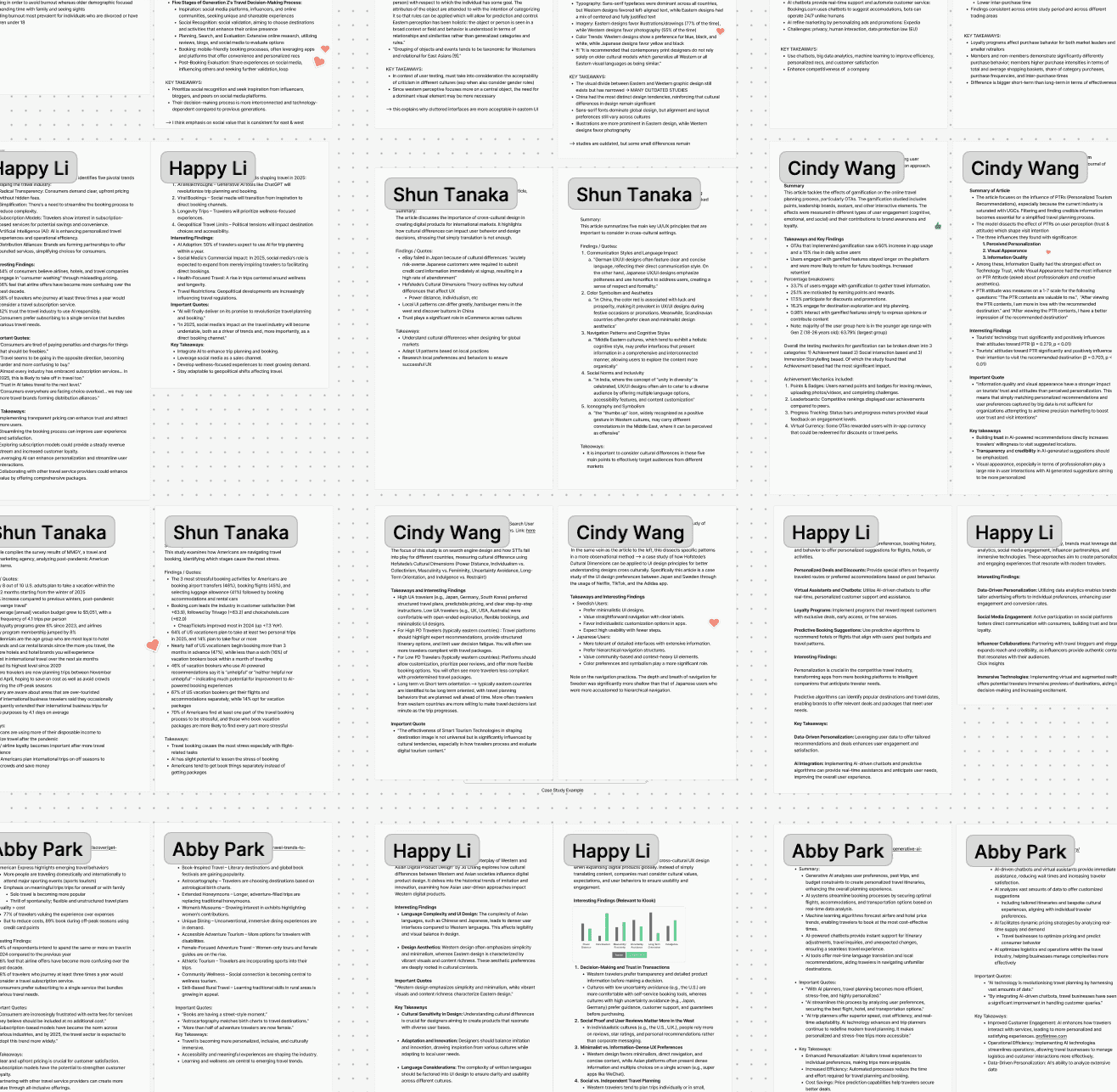
Our team conducted a literature review of 40+ studies on cross-cultural design, including insights from “The Culture Map” by Erin Meyer.